
Top Rated Winter Boots in Canada
The best winter boots to buy in Canada, what each one is genuinely best at, and why ice, salt and an unregulated warmth claim change the choice here.
At a glance
| # | Product | Best for | Price |
|---|---|---|---|
| 1 | Men's Revel IV Polar Waterproof Boot | Best overall | $230–$240 |
| 2 | Nation Plus | Best value in deep cold | $159.99 |
| 3 | Chloe | Best women's fit | $220.00 |
| 4 | Impact | Best for extreme cold | $261–$290 |
| 5 | Men's Arctic Sport Tall | Best for working outside | $140–$200 |
| 6 | Thermo Chill 2 Mid Waterproof | Best for winter hiking | $200 |
| 7 | Winter Thermal All-Terrain #2241 | Best for city commuting | $329.95 |
Two things separate buying boots here from buying them anywhere else, and neither of them is cold.
The first is ice. A rehabilitation lab in Toronto has spent years walking people across an ice rink on a floor that tilts until they slip, and the great majority of winter boots put through it could not hold a seven degree slope. That is the hazard in a Canadian winter: not the temperature, which the worst boot here handles, but the thirty metres of glare ice between a salted sidewalk and a car door. Almost every boot in this category is sold on how cold it can go, a problem the industry solved decades ago, rather than on grip, which it has not solved.
The second is that our winter keeps changing its mind. A week in most of the country can hold hard, dry cold and a thaw that turns every curb into a slush pool. A boot optimised for one is compromised in the other: the warmest boots here are the most vulnerable to standing water, and the leather boot that handles slush best gives up soonest when it turns properly cold.
So the boots that finish high are not the warmest. They are the ones that stay upright on ice, stay dry through a thaw, and dry out overnight before you do it again tomorrow.
The list
Men's Revel IV Polar Waterproof Boot
Best overall
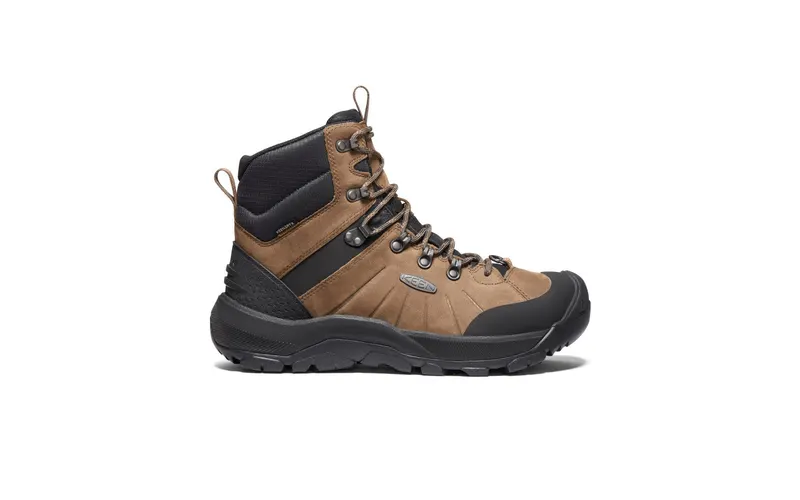
The one that treats ice as the problem it actually is, and still walks like a hiking boot at the end of a long day.
Why it is here
What puts people here in an emergency room in February is not cold, it is a patch of ice on a cleared sidewalk. This is the boot whose strongest showing was traction on icy terrain, with stable support underfoot rather than the wobble that comes with a tall, soft shell. Everything else here earned its reputation on warmth. Warmth is the easier problem, and it is not the one that breaks a wrist.
It also plans for the mornings when no outsole is enough, taking microspikes and gaiters, so freezing rain in the forecast has an answer that is not a second pair of boots. The interior is cut roomy enough for a thick wool sock without crushing it, which is where most of the warmth in any winter boot comes from, and the membrane held up as waterproof in testing rather than only in the marketing.
It sits first in spite of a shaft far shorter than the pac boots here, and that is deliberate. Most winter days in a Canadian city are a shovelled path, a salted crosswalk and a parking lot, and on all three it is better company than anything below it. In snow nobody has cleared it is plainly the wrong tool. The boots that beat it there ask you to give up walking comfort for the other five months.
Best for
- Icy sidewalks and crosswalks
- Winter day hikes
- Wide feet
- Thick wool socks
What sets it apart
Keen leads on sustainability rather than on grip, which undersells the boot. Ice is where it is strongest, and on a list where everything else argues about warmth, that is the rarer quality.
Worth knowing
- The shaft is short, well below the pac boots here. In snow that has not been cleared you will take some over the cuff.
- The roomy last that suits a wide foot reads as sloppy if your foot is narrow. Try it with the socks you will actually wear.
- It looks like technical gear. Nobody will mistake it for something you wear to dinner.
Nation Plus
Best value in deep cold
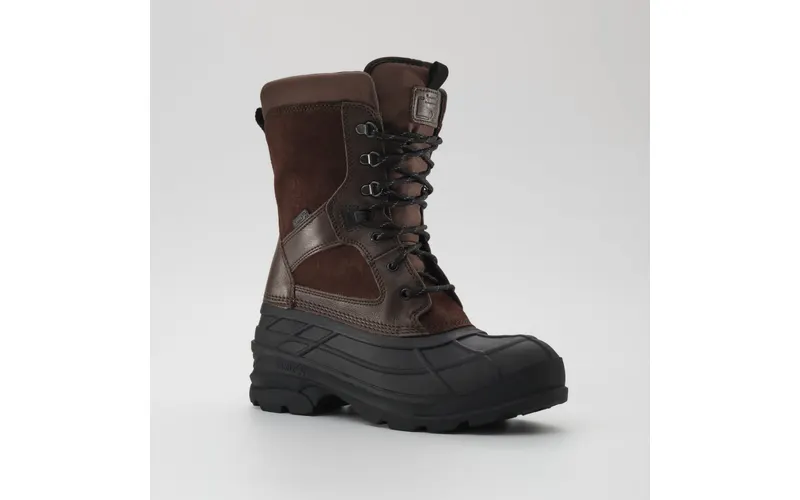
A removable deep-cold liner and lugs that shed packed snow, near the bottom of what this category costs.
Why it is here
This is the most boot per dollar on the list. The liner comes out, which matters more here than any rating printed on a box: a liner you can pull and dry overnight is a warm boot tomorrow, and a sealed boot that sweated through yesterday is not. The lugs are deep and self cleaning, so packed snow drops out instead of building into the smooth plug that turns a treaded sole into a ski.
It is warmer on paper than the boot above it and taller in the shaft, for less money. What it does not do is walk well. The construction is stiff with little cushioning, and the fit runs loose and sloppy with little arch or ankle support to hold the foot in place. On a driveway or a school run that is a fair trade. On a full day on your feet it stops being one.
Durability is where the price shows. Stitching frayed sooner than on costlier boots, and the laces come undone often enough to be a habit rather than an accident. This is a boot with a job and a lifespan, not an heirloom. For a growing teenager, a spare pair in the trunk, or a winter measured in minutes outdoors rather than hours, that maths works.
Best for
- Deep cold on a budget
- Driveways and bus stops
- Drying a liner overnight
- Spare pair in the car
What sets it apart
A liner that comes out to dry, at a price where that feature usually disappears. Kamik leans hard on a Quebec origin story, which is worth knowing is a story about the brand rather than about this boot.
Worth knowing
- The fit is loose and sloppy with little arch or ankle support, and the laces work themselves undone.
- Stiff, with not enough cushioning for a long day standing or walking.
- Stitching frayed sooner than on the more expensive boots here.
Chloe
Best women's fit
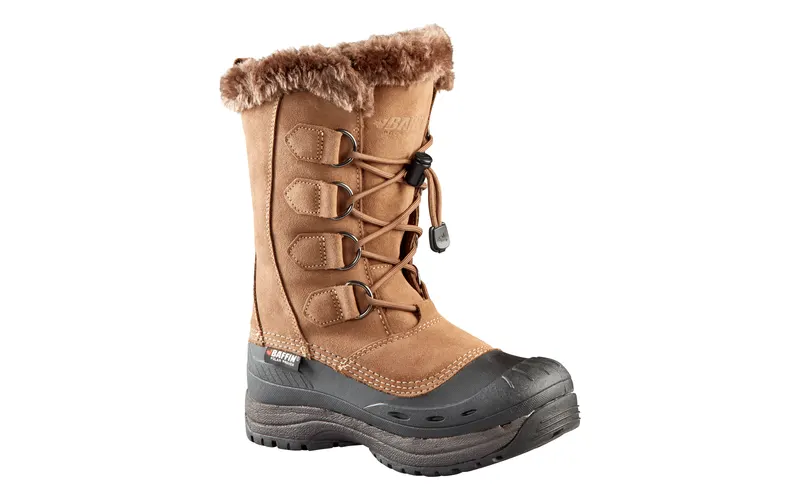
Built on a women's last rather than a shrunken men's one, with warmth to spare and lacing you can work without taking your gloves off.
Why it is here
Most winter boots sold to women are a men's pattern scaled down, and the result is loose at the heel and tight across the forefoot at once. This one is drawn around a women's fit from the start, and the warmth that comes with it is exceptional rather than merely adequate. The lining breathes, which is the quiet reason a warm boot stays warm: a foot that sweats into its insulation is a cold foot an hour later.
The detail that earns its place is the quick pull lacing, which cinches with gloves on. That sounds minor until it is dark, the wind is up, and the alternative is bare fingers on a frozen lace. Traction rated as effective, and the inner boot is removable, so it shares the drying advantage of the boot above without sharing its sloppy fit.
It sits below the two above it on versatility rather than quality. It is heavier than it looks, and the bulk carrying that insulation is the same bulk that stops it passing as an everyday boot. Baffin markets it as fashion forward and function first, which is true of the second half.
Best for
- A women's last, not shrunk
- Gloves-on adjustment
- Very cold school runs
- Drying a liner overnight
What sets it apart
Lacing you can work wearing mitts, on a boot drawn around a woman's foot instead of adapted to it.
Worth knowing
- The footbed is narrow and the boot runs small. Plan on half a size up, more with heavy socks.
- Heavier and bulkier than it looks, which limits how often you reach for it on a mild day.
- It is rated less cold than the boots directly above and below it here. That is plenty for a city winter and short of what standing still outdoors asks for.
Impact
Best for extreme cold
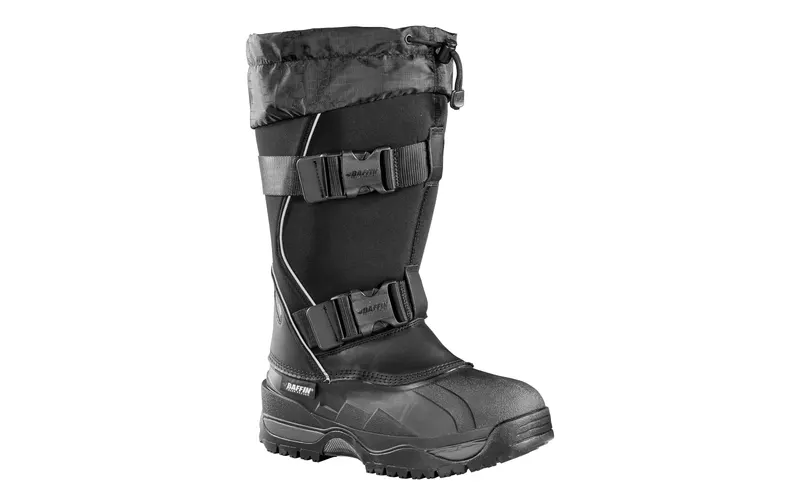
Rated colder than anything else here by a wide margin, with the most involved liner system on the list. Built for standing still, not for walking.
Why it is here
Every warmth claim in this category quietly assumes you are moving and making heat. This is the boot for when that assumption fails: ice fishing, a stalled car on a rural highway, a pre dawn shift spent standing in one place. The multi layer inner boot is the most comprehensive system here, and the cold rating sits far below anything a Canadian city produces in a bad week.
That capability is bought with weight and with walking mechanics that are genuinely poor. It is heavy, and the shape holding all that insulation will not let a foot roll through a stride. Breathability suffers too, which is the trap: wear it for an active day, sweat the liner out, and discover that a soaked liner in deep cold is worse than a thinner boot that stayed dry.
The weakness that matters most here is water protection, flagged against a boot otherwise built for the poles. A February thaw in southern Ontario is slush to the ankle, and slush is the condition it suits least. Buy it for hard, dry cold. For a city winter that crosses freezing twice a week it is the wrong purchase at any price.
Best for
- Standing still outdoors
- Ice fishing and sledding
- Hard, dry cold
- A boot for the truck
What sets it apart
Nothing else here is rated anywhere near this cold, and nothing else carries a liner system this elaborate.
Worth knowing
- Heavy, and it walks badly. This is not a boot for covering distance.
- Poor breathability means an active day sweats out the liner, costing you the warmth you paid for.
- Water protection is its weak point, so slush and wet thaws are the conditions to avoid.
Men's Arctic Sport Tall
Best for working outside
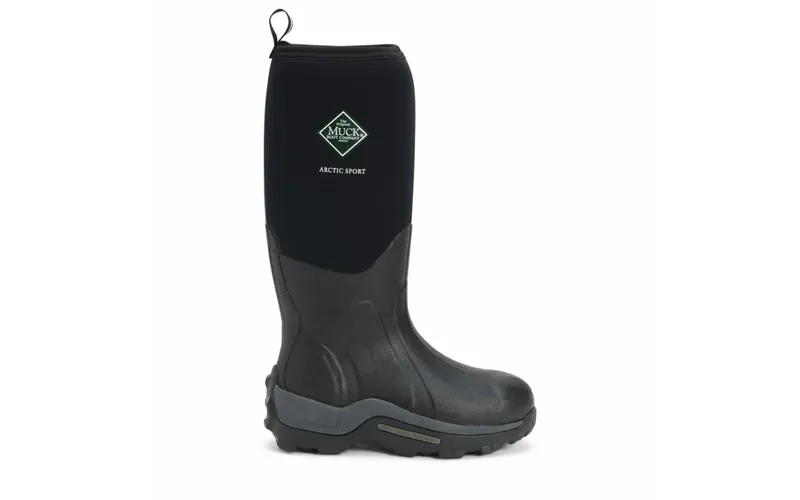
The tallest boot here, pull on, fully waterproof, and hoseable at the end of a filthy day.
Why it is here
For chores this is the simplest answer on the list. The shaft is the tallest here, so unbroken snow and standing slush stay outside the boot. There is nothing to lace, so nothing to freeze shut or clog with ice while your hands are full. The neoprene is waterproof through the whole boot rather than at a membrane you have to protect, and it hoses clean after a barn, a driveway or a thaw that turned the yard to mud.
It is rated for deep cold, and the pull on shape is the point: step into it on the way out and step out of it in the porch. Against the expedition boot above, this is the better buy for anyone moving through the cold rather than standing in it, and it costs less.
The cost is heel fit. Rubbing showed up after prolonged wear, and a pull on boot gives you no way to lace it down against that. For an hour of snowblowing it is nothing. For a full shift it is a blister, and a thicker sock is the only adjustment you have.
Best for
- Barn and yard work
- Deep, unbroken snow
- Slush and mud
- Stepping out quickly
What sets it apart
The tallest shaft here on a boot you can rinse clean with a hose, with no laces to freeze.
Worth knowing
- Heel rubbing after long wear, and no lacing to tighten the fit against it.
- A pull on rubber boot walks like one. It is not a boot for distance.
- The upper is neoprene, so it will never look like anything but work gear.
Thermo Chill 2 Mid Waterproof
Best for winter hiking
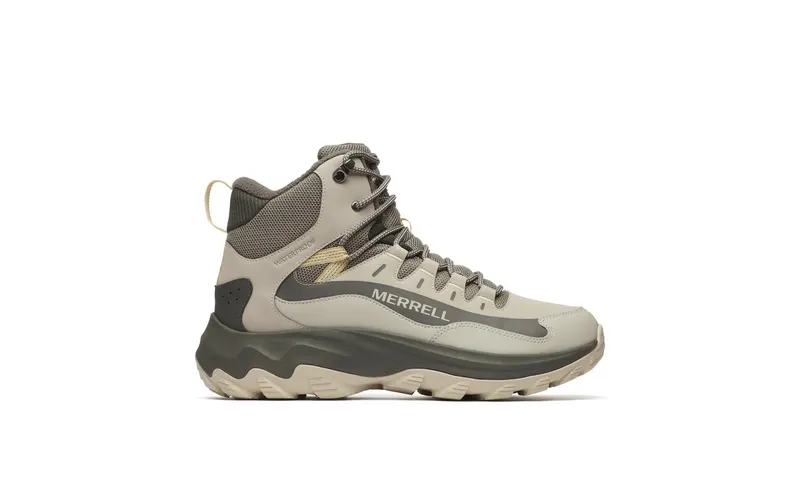
Lighter than a winter boot has any right to be, waterproof and grippy, for the cold days that are not buried in snow.
Why it is here
This is the least boot like thing here and that is the argument for it. It is lighter than typical winter boots, which is the difference between a trail you enjoy and one you endure, and it is built around cold weather hiking rather than standing in a field. The membrane keeps water out while letting sweat leave, and the sticky rubber outsole is the same idea Merrell uses on its three season hikers.
Where it runs out is depth. It is not adequate once snow gets past a few inches, and Merrell publishes no temperature rating at all, leaving you to judge warmth by insulation weight alone. That is an honest position for a maker to take, and it tells you what the boot is: a shoulder season and packed trail boot, not a January answer for a rural driveway. It also settles the overlap with the boot at the top of this list, which walks a winter day hike well and then handles the other five months of the year. That one is the single pair for everything. This is the one to put on when the distance is the point.
That leaves it and the Blundstone below arguing over the same buyer, the one whose winter is mild and mostly on cleared ground. The Blundstone wins on looking like a normal boot and loses on hard cold, where its own maker says the warmth and the grip both go. This one has a sticky outsole and a membrane that are doing the same job they do the rest of the year, so it holds on a cold, wet path long after the Blundstone has stopped being the right choice. If the walk is short and ends at a desk, take the Blundstone. If the walk is the point, take this.
Best for
- Packed winter trails
- Shoulder season cold
- Long distances on foot
- Cold days without deep snow
What sets it apart
It moves like a hiking boot rather than a winter boot, and it is the one here you would happily cover real distance in.
Worth knowing
- Not enough boot once the snow is more than a few inches deep.
- No published temperature rating, so insulation weight is all you have to judge by.
- Merrell leads on recycled materials rather than cold performance, a fair signal of where its priorities sit.
Winter Thermal All-Terrain #2241
Best for city commuting
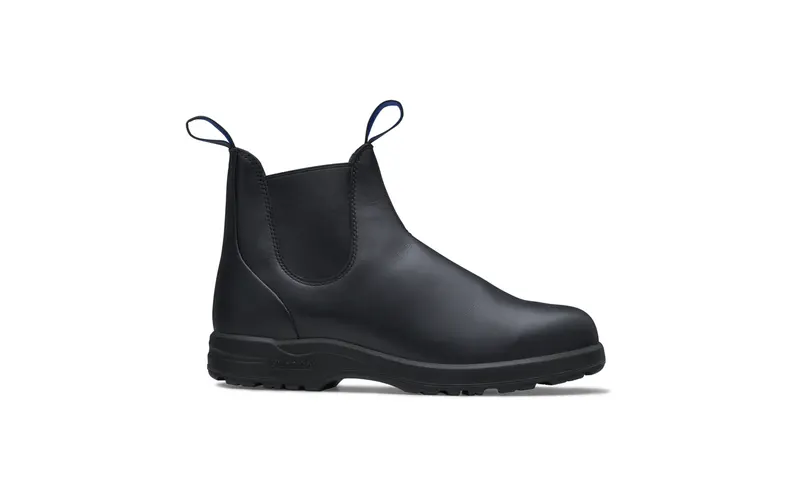
The one you can wear into an office, with real waterproof leather over insulation, as long as your winter stays moderate.
Why it is here
There is a genuine gap between boots that work and boots you can wear to work, and this fills it. Waterproof leather, sealed seams, insulation and a removable sheepskin footbed sit inside a silhouette that reads as an ordinary Chelsea boot. There are no laces, so it goes on in the time it takes to find your keys, and the self cleaning outsole sheds the slush and grit a city winter produces more of than snow.
It is the most expensive boot on this list, and a large premium over the same maker's version without the winter package. If your winter is a walk to transit, a day indoors and a walk home, that premium is defensible in a way a second expedition boot never would be.
It finishes here because of what Blundstone says about it. Both the warmth and the slip resistance fall away once the cold gets properly serious, and grip on ice is compromised outright. In a country where ice is the hazard that costs people teeth and wrists, that is the worst place for a weakness to sit. It is a very good moderate winter boot sold into a climate that regularly stops being moderate.
Best for
- Commuting and office wear
- Slush and road grit
- Mild coastal winters
- Getting out the door fast
What sets it apart
The only boot here nobody would notice you were wearing indoors, built on genuinely waterproof leather rather than a fashion approximation of it.
Worth knowing
- Warmth and grip both drop away once it gets properly cold, by the maker's own account, and slip resistance on ice is compromised.
- The most expensive boot here, at a steep premium over the same boot without the winter package.
- The footbed comes out but the insulation does not, so there is no liner to pull and dry.
Side by side
| Product | Strongest at | Price | Temperature rating | Insulation | Waterproofing |
|---|---|---|---|---|---|
| Men's Revel IV Polar Waterproof Boot | Best overall | $230–$240 | -25°F / -32°C | 200g KEEN.WARM Recycled P.E.T. insulation, plus heat-trapping materials underfoot | KEEN.DRY waterproof, breathable membrane |
| Nation Plus | Best value in deep cold | $159.99 | -40°C / -40°F | 145G HeatMX removable liner | Waterproof, seam-sealed |
| Chloe | Best women's fit | $220.00 | Tundra Rated: -10°C to -30°C (14°F to -22°F) | Removable Comfort-Fit multi-layer inner boot system | B-Tek Dry Waterproof Base |
| Impact | Best for extreme cold | $261–$290 | -45°C to -60°C / -49°F to -76°F (Polar Rated) | Removable Comfort-Fit multi-layer inner boot system: Thermaplush wicking layer, B-Tek Foam lining, Double B-Tek Heat 4-channel hollow-fibre insulation, Vapourized Aluminum Membrane, PolyWool blend, Hydromax moisture management, DiamondNet insulation | B-Tek Dry Waterproof Base |
| Men's Arctic Sport Tall | Best for working outside | $140–$200 | -40°F to 40°F / -40°C to 4°C | 5mm CR Flex-Foam neoprene liner, fleece lining, 2mm thermal foam underfoot | 100% Waterproof |
| Thermo Chill 2 Mid Waterproof | Best for winter hiking | $200 | 200g insulation | Waterproof membrane, seals out water and lets moisture escape | |
| Winter Thermal All-Terrain #2241 | Best for city commuting | $329.95 | Warmth and slip-resistance reduced below -15°C | 200g Thinsulate, leather lined, removable sheepskin footbed | Premium waterproof leather, tight-knit coated elastics, sealed seams |
Which one for your situation
- One pair of boots for a normal city winter
- Men's Revel IV Polar Waterproof Boot Ice is what you will actually be walking on, and grip on it is this boot's strongest quality.
- The most warmth you can get without spending much
- Nation Plus A deep cold rating and a liner you can dry overnight, near the bottom of what this category costs.
- A woman's foot that nothing ever fits properly
- Chloe Drawn on a women's last rather than shrunk from a men's, and you can tighten it with gloves on.
- Standing outside in cold that does not let up
- Impact Rated far colder than anything else here, for when you are generating no heat of your own.
- Chores, a barn, a driveway full of slush
- Men's Arctic Sport Tall Tallest shaft here, nothing to lace, and you can hose the whole thing off afterwards.
- Boots I can wear into the office
- Winter Thermal All-Terrain #2241 Waterproof leather over insulation in a shape nobody reads as winter gear, for a winter that stays moderate.
What to spend
| Job | Typical range | What moves it |
|---|---|---|
| Entry-level pac boots | $100 to $180 | Buys a deep cold rating and usually a removable liner. Expect stiff construction, thin cushioning and an approximate fit. |
| Mid-range insulated winter boots | $180 to $260 | The band most people should shop in. The money goes into the outsole compound, a membrane that has been tested rather than claimed, and a fit that survives a full day. |
| Premium winter boots and leather commuters | $260 to $360 | Buys leather, a branded outsole and a boot you can wear indoors without changing. It does not buy more warmth, and sometimes buys less. |
| Expedition and extreme-cold boots | $260 to $500 | Multi-layer removable liners and shafts built for standing still in cold a city never reaches. Heavy, and poor at walking. |
| Traction aids, socks and spare liners | $25 to $90 | The cheapest line here by a wide margin. The money buys pull-on cleats that fold into a coat pocket, socks with enough wool in them to keep working when damp, and a spare liner for a boot that takes one. |
Canadian prices in CAD, before tax. They move with sales and exchange rates.
How to choose
The temperature rating is not a standard
Nothing regulates what a maker prints on a winter boot. The estimate assumes you are walking rather than standing, and that your foot is dry, so two boots showing the same number can be a season apart. Read it as the maker's ambition, then judge the insulation, the liner and the fit, which are facts.
Ice is what to shop for, not cold
Cold is the claim every boot in this category makes. Grip is the one that separates them, and there is a Canadian slip rating for it, marked as snowflakes on the boot or its listing. Very few boots carry one, so a boot that does is showing you evidence instead of an adjective. The outsoles that earn it are formulated to stay soft and tacky on wet ice, which is not the same thing as being cut with the deepest tread: deep lugs are for snow and mud, and they do almost nothing on a glare patch.
A liner that comes out is worth paying for
Feet sweat, insulation absorbs it, and wet insulation does not insulate. A removable liner dries overnight, which is the difference between a warm boot every morning and one that gets colder through a cold snap. A sealed boot needs a full day indoors to recover, and in January it rarely gets one.
Fit it with the socks you will wear
Most of a winter boot's warmth is air held around the foot, and a thick sock crushed inside a snug boot holds none of it. Size for the heaviest sock you own, and try the boot on late in the day, when your feet are at their largest, so the fit you judge is the worst case rather than the best. Then check the heel: one that lets your heel lift will blister you, and a pull-on gives you no lacing to correct it.
Match the shaft to your actual winter
Shaft height decides whether snow ends up inside the boot, and it is the measurement most people skip in favour of the temperature claim. A low winter hiker is right for cleared sidewalks and wrong for an unshovelled driveway. If you get both, the taller boot plus gaiters covers more ground than a second pair will.
Budget for what road salt does
The brine spread on Canadian roads eats leather and leaves white tidelines that set permanently if they dry in. Wipe it off with a damp cloth the day it happens and dry the boot away from a radiator, because direct heat cracks leather and stiffens adhesives. Rubber and neoprene shrug this off entirely.
Questions people ask
Where do I actually buy these in Canada?
All of them are sold here in CAD, several straight from the maker's Canadian store and the rest through Canadian outdoor and footwear retailers. Winter boots are seasonal in the strictest sense: selection peaks in October and November, the common sizes are gone by January, and what is left in February is discounted because it fits almost nobody.
Is it cheaper to order from a US retailer?
Rarely, once it lands. Footwear carries one of the higher duty rates Canada applies, up to roughly twenty percent, and the free-trade exemption covers only goods actually made in North America. Most winter boots are made in Asia, so it does not apply whichever country you ordered from. A courier shipment also owes tax above $40 and duty above $150, plus brokerage at the door.
Is a waterproof membrane worth it, or is water resistant enough?
Here it is worth it. The freeze and thaw cycle most of the country runs on means standing slush and road brine rather than dry powder, and a water resistant upper gives you a few hours of that at best. A membrane is not insulation, though, and it has to let sweat out as well as keep water off, which is why a boot that breathes well stays warm longer than its rating suggests. Whatever the upper, reproof it once a season. Leather or fabric that has wetted out on the surface holds cold against your foot even while the membrane underneath is still doing its job.
Is thicker insulation warmer than a removable liner?
Not over a week. Insulation weight decides the first morning, and a liner you can pull decides every morning after it. So if the boots are going on daily, prioritise the liner. If they come out a few times a winter, insulation weight is the simpler thing to compare and usually the cheaper.
Do I still need ice cleats if the boot grips well?
On freezing rain, yes. No winter boot outsole is reliable on wet ice, whatever it is rated for, and a glaze that formed overnight on a bare sidewalk gives a rubber compound nothing to work with. A pull-on cleat costs a fraction of any boot here and turns the worst mornings into ordinary ones. Take them off indoors: they are lethal on tile and will scar hardwood.
How long should a pair last, and what tells me to replace them?
Longer than the grip does, which is the part nobody checks. Outsole rubber hardens as it ages, so a boot in its fifth winter can look barely worn and still slide on ground it used to hold. The other two signals are a liner that has packed flat and no longer springs back under the heel, and stitching that has begun to open where the boot flexes across the toe. A pair that has only lost its footbed or its laces is worth fixing. One that has gone hard underneath is not.