
Top Rated Ski Jackets in Canada
The ski jackets worth buying in Canada, what each one is genuinely best at, and how wet coastal snow and dry interior cold change the choice here.
At a glance
| # | Product | Best for | Price |
|---|---|---|---|
| 1 | Sabre Jacket | Best overall | $900.00 |
| 2 | Men's Hemispheres Team GORE-TEX 3L Jacket | Best for lift and skin days | $874.95 |
| 3 | Rush Jacket | Best for backcountry touring | $1,000.00 |
| 4 | Sentinel Jacket | Best women's freeride shell | $900.00 |
| 5 | Malone Jacket | Best value | $260.00 |
| 6 | SMARTY 3-in-1 Form Jacket | Best for the coldest days | $420.00 |
Canada is not one skiing climate, and the jacket that suits one half of it is the wrong buy in the other. Coastal snow is warm and heavy and the season includes rain at the base, so a shell that soaks through after a couple of hours matters far more here than somewhere drier. The interior ranges and the Alberta side of the Rockies are colder and drier, where that same jacket is fine and a softshell is better. Eastern winters run on freeze-thaw and firm snow, with the best turns in the glades, so branches decide durability more than weather does.
That is what sorts this list. The jackets near the top are the ones that held up in both kinds of winter, wet and cold, rather than excelling in one. The ones lower down are honest about which half of the country they suit, and better value if you live in it.
The season here is long enough to change the weighting as well. A hill that opens in November and closes in May asks a jacket for five or six hundred days over its life, not one winter, so how something ages counts for as much as how it performs new. Durability is worth more on this list than a gram saved, unless you are the one carrying it uphill.
The list
Sabre Jacket
Best overall
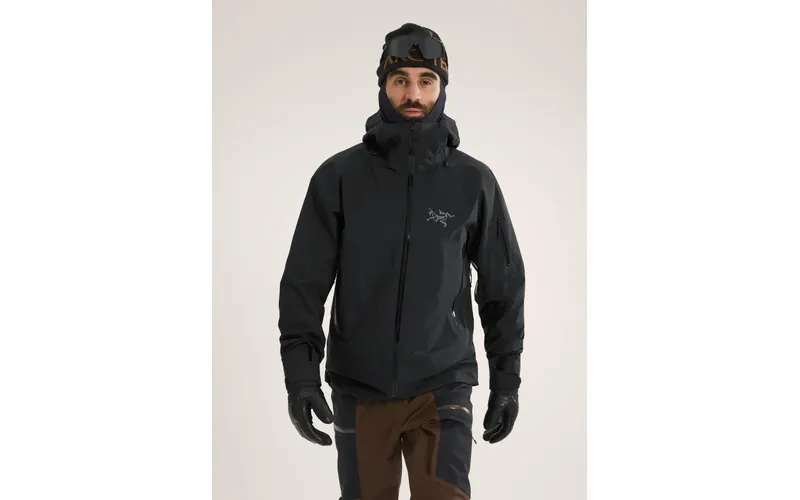
A freeride shell that took a full season of hard days in three different winters and came out the other side without a mark on it.
Why it is here
The longest record here, and the roughest. More than a hundred days in a single season, across resort wind, heavy wet coastal snow and storm days, and in an all-day rain event it began to feel damp without ever wetting out, then dried quickly. That is the failure mode that ends most ski days in this country, and it did not happen.
The other finding matters just as much for anyone who skis glades. Multiple seasons of being swiped through trees at speed left it with no durability problem to report. The shell below it, in an earlier version, came back with small holes nicked in the cuffs where ski bindings caught it. In Quebec and Ontario, where the trees are where the snow keeps, a shell that shrugs off branches is worth more than one that saves a few grams.
Leaving the insulation out is the right call for a jacket you will wear from a January chairlift to a wet April afternoon, because you change what goes underneath rather than owning two jackets. It also carries more pockets than the touring shells here, which is what you notice on a resort day when a pack is not part of the plan.
Best for
- Resort days in any weather
- Skiing trees hard
- Wet coastal snow
- One jacket for the season
What sets it apart
Nothing else here has been tested this long or this hard in one season, and nothing else came through it undamaged. The others have proved a quality. This one has proved its lifespan.
Worth knowing
- There is no chest pocket, which is the one thing you want when you are wearing a pack and a hipbelt covers the hand pockets.
- The powder skirt does not come out, so it is always with you, including on the spring hike when you would rather it was not.
- It carries more weight than the touring shells here. That weight is the durability, but you feel it on a long climb.
Men's Hemispheres Team GORE-TEX 3L Jacket
Best for lift and skin days
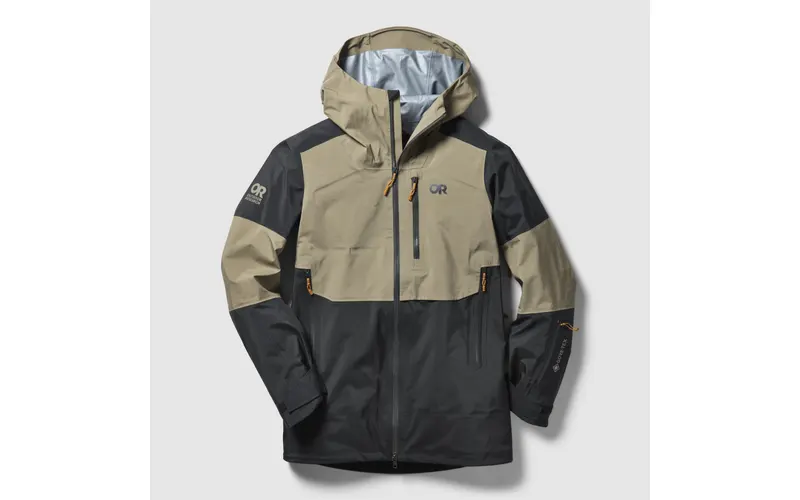
The best collar and hood on this list, on a shell breathable enough to climb in and sealed enough to sit on a cold chairlift.
Why it is here
Two details lift this one. The collar is wide, deep and comfortable against the face, and nothing else here is as good at that job. The hood sits flat over a helmet, which is where most of them fail. Small things, until a February lift line in a crosswind, when the collar is what you pull up and the hood decides whether snow goes down your neck.
It also breathes unusually well for a hardshell, and that shows most on a climb, where a sealed jacket normally turns into a sauna. It still blocked wind and heavy snow from warm spring laps through cold, windy lift days. Sealed on the ride and vented on the climb is what a day of mixed skinning and lift skiing asks for, and most jackets get half of it right.
It is also sold with a guarantee to perform for the lifetime of the jacket rather than for a fixed number of years. At this end of the market that changes the arithmetic of the purchase more than any feature on the hangtag.
Best for
- Mixed skinning and lift days
- Cold, windy chairlifts
- Skiers who run hot
- A guarantee that lasts
What sets it apart
The collar and hood are the best pairing here, and the guarantee behind the jacket runs for its lifetime rather than a set number of years.
Worth knowing
- The fabric is thin for its class, and an earlier version picked up small nicked holes at the cuffs from ski bindings. For someone who skis resort days every weekend, the pick above it will last longer and costs about the same.
- Everything it is best at points at effort and exposure: breathing on the way up, sealing on the ride back down. If your season is deep cold lift laps and nothing else, the insulated pick at the bottom of this list covers those days for a good deal less.
Rush Jacket
Best for backcountry touring
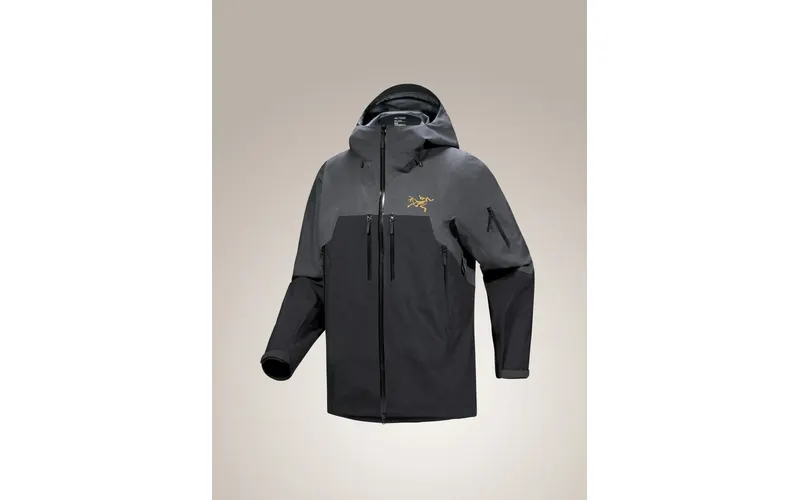
The lightest weight recorded here, built for the climb rather than the lift, and priced accordingly.
Why it is here
Everything about this one points uphill. It is a touring shell and does not pretend otherwise, which is rare in a category where every jacket claims every use. It carries the lightest weight recorded here, a shade under the shell above it, and packs down small enough to live in a touring pack on the days you do not wear it.
The performance held where it counts. Nothing got through it, not snow, not wind, not rain. A featherweight shell that still seals is the hardest thing to build in this category, and it is why this one takes the touring pick over the thinner-fabric shell above it.
It is also the most money here, which is the honest reason it sits below the lift picks. For a skier who rides lifts, the jacket at the top of this list does the same job in worse weather for less money, with the season-long durability record to go with it. Buy this one because you skin, not because it is the expensive one.
Best for
- Touring and splitboarding
- Long climbs
- Packing a shell all day
- Counting grams
What sets it apart
It is the only jacket here that gives up resort duty outright to save weight, and the only one light enough that carrying it unworn is not a decision.
Worth knowing
- It costs more than anything else here and gives you less fabric for the money. That is the trade, but it is a steep one.
- The powder skirt is fixed in place, which is an odd choice on a jacket built for people who spend half the day walking uphill.
- It has fewer pockets than the two shells above it, so a pack becomes part of the system rather than an option.
Sentinel Jacket
Best women's freeride shell
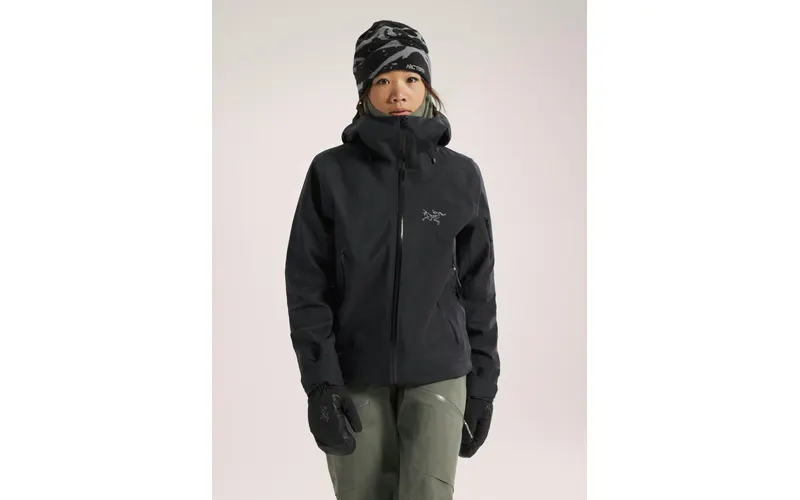
The women's freeride build, with vents long enough to climb in and a laminate that holds up in a storm.
Why it is here
This is the women's counterpart to the shell at the top of this list, and it earns its place on the same quality: fully taped seams and a laminated fabric that kept underlayers dry in a storm. The difference is the venting. Long armpit vents dump heat properly on a climb, which is what most freeride jackets get wrong, because they are designed around the descent.
It is lighter than the men's shell at the top of this list and carries the same laminate, which is the combination worth having on a day that starts with a boot pack and ends in a storm. The flannel backer against the skin is comfort rather than warmth: there is no insulation here, which is the honest trade for a shell you want to vent on a climb. For one jacket covering resort storm days and the occasional hike to a ridge, this is it.
It sits here rather than higher for a simple reason: it has not been through the season-long durability record the top pick has. What it has proved is weather resistance. What it has not proved is how it holds up after several winters in the trees.
Best for
- Women's fit
- Big mountain and storm days
- Venting on the climb
- Layering over a base
What sets it apart
It is the only jacket here whose vents were singled out as actually working on a climb, and it does that while weighing less than the men's shell at the top of this list on the same laminate.
Worth knowing
- It is stiff out of the box.
- It offers less warmth than other jackets here, so on a deep cold morning you are relying entirely on what you put underneath.
- It has fewer pockets than the shell at the top of this list, which is a real difference if you ski with a phone, goggles and a radio.
Malone Jacket
Best value
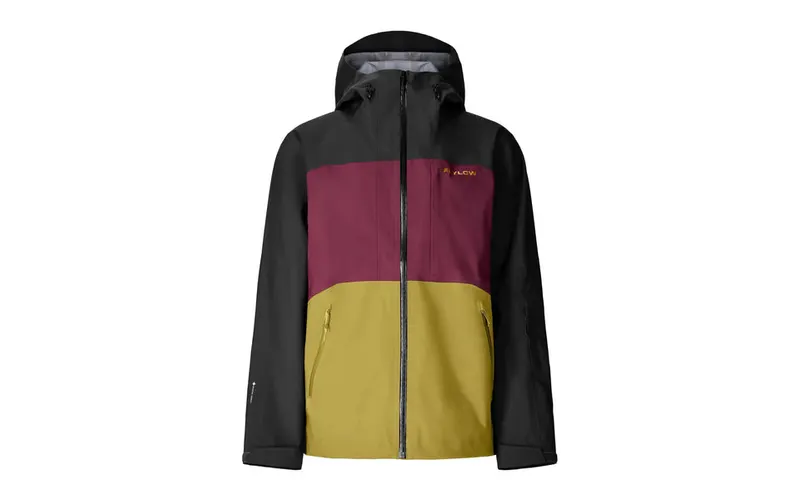
A stretchy softshell laminate that costs the least here by a wide margin and skis better than its price suggests, as long as the day stays dry.
Why it is here
The least expensive jacket here by a distance. The stretch softshell laminate was breathable while staying waterproof, and the hand pockets are lined with fleece, a detail usually reserved for jackets costing far more. Stretch is the whole design brief, and for once that is a fair description of the jacket.
Where it belongs is cold, dry skiing: the interior ranges, the Rockies, spring corn laps, any day you are working hard and want a jacket that moves with you. Stretch is what you notice in trees and in steep terrain, and it is what the stiff hardshells here give up. It is also the one here you can be relaxed about, because a season of scraping through branches costs a fraction of what it costs the shells above it.
The limit is prolonged rain. The softer, stretchier face fabric wets out in sustained wet weather, growing heavy and clammy underneath once the water repellent finish has worn down. That rules it out as a single jacket for the coast or for an eastern freeze-thaw winter, and rules it in everywhere else.
Best for
- Cold, dry interior days
- Spring skiing
- Skiers on a budget
- Stretch in steep terrain
What sets it apart
It is the least expensive jacket here and the only one built around stretch rather than armour, which is why it moves better than anything above it.
Worth knowing
- It wets out in sustained rain and gets heavy and clammy when it does. For coastal winters and eastern freeze-thaw, buy higher up this list.
- Nobody has yet put it through several hard seasons the way the shells above it have been put through them, so how it ages is an open question.
SMARTY 3-in-1 Form Jacket
Best for the coldest days
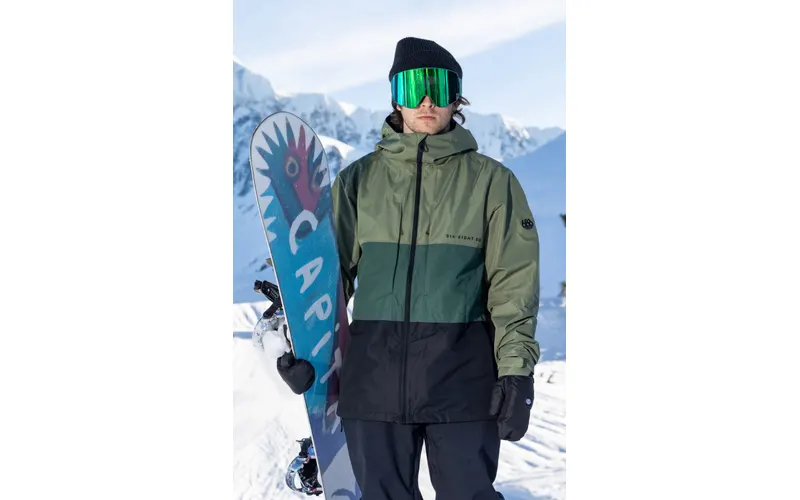
The only jacket here that brings its own warmth, in a liner you can pull out when the season turns.
Why it is here
Everything else here expects you to supply the heat. This one arrives with a removable puffer liner that held a comfortable temperature from above freezing down to about fifteen below, and it wears three ways: shell alone, liner alone, or both. For the prairie hills, the Rockies in January or a Quebec morning well under freezing, that is the difference between a jacket you fight and one you zip up. The cuffs seal tightly over gloves, which is what keeps snow out on a bad day.
The modular system is also the honest answer for someone buying one jacket for the whole winter rather than for skiing alone. The liner on its own is a town jacket, the shell on its own handles a mild afternoon, and the two together handle the deep cold. Nothing else here does more than one job.
It finishes last because of how it handles everything that is not cold and dry. Breathability is its weakest quality by a distance: the insulation and the shell fabric run stuffy and the underarm vents do not move enough air to fix it. The outer fabric saturated after a couple of hours in sustained rain and was slow to dry. In cold, dry conditions none of that surfaces. On the coast, or in April, all of it does.
Best for
- Deep cold
- One jacket for the winter
- Lift-served skiing
- Wearing it off the hill
What sets it apart
It is the only jacket here with insulation, and the only one that is really two garments, so it is one purchase where the rest of this list is a jacket plus a midlayer.
Worth knowing
- Breathability is its weak point. If you work hard on the way down or hike for anything, you will overheat in it.
- The shell saturates in sustained rain and takes a long time to dry, so it is the wrong jacket for coastal winters and wet spring days.
- It is heavy, and the hood loses its shape in wind despite the cinch straps.
Side by side
| Product | Strongest at | Price | Weight | Shell fabric | Insulation |
|---|---|---|---|---|---|
| Sabre Jacket | Best overall | $900.00 | 705 g | 3L GORE-TEX ePE, 80D plain-weave recycled nylon | None (shell, flannel backer) |
| Men's Hemispheres Team GORE-TEX 3L Jacket | Best for lift and skin days | $874.95 | 493 g | Bluesign-approved 3L GORE-TEX, 100% recycled nylon 80D face, ePE membrane, C-KNIT backer | None (shell) |
| Rush Jacket | Best for backcountry touring | $1,000.00 | 485 g | 3L GORE-TEX PRO ePE with FC0-DWR | None (shell) |
| Sentinel Jacket | Best women's freeride shell | $900.00 | 605 g | 3L GORE-TEX ePE, beam-dyed 80D recycled nylon | None (shell, flannel backer) |
| Malone Jacket | Best value | $260.00 | Recycled Tactic 3-layer softshell | None (softshell) | |
| SMARTY 3-in-1 Form Jacket | Best for the coldest days | $420.00 | 2-layer infiDRY 20K, fully taped Bemis seams | Removable 160g infiLOFT synthetic puffer liner |
Which one for your situation
- One jacket for a whole Canadian season
- Sabre Jacket It has handled wind, wet snow and a full day of rain in one season, and it survives the trees.
- You skin uphill as much as you ride the lift
- Men's Hemispheres Team GORE-TEX 3L Jacket It breathes properly on the climb and its collar and hood are the best here for the cold ride back up.
- A touring kit where weight decides everything
- Rush Jacket The lightest weight recorded here, and nothing got through it: not snow, not wind, not rain.
- A women's shell for storm days
- Sentinel Jacket Fully taped seams kept underlayers dry in a storm, and the vents are long enough to climb in.
- Good skiing on a small budget
- Malone Jacket The least expensive jacket here by a distance, provided your winters are cold rather than wet.
- January in the Rockies and no warm layers yet
- SMARTY 3-in-1 Form Jacket The liner comes in the box and comes out again in spring, so you are not buying a jacket and a midlayer.
What to spend
| Job | Typical range | What moves it |
|---|---|---|
| Entry-level resort jackets | $150 to $300 | Basic coatings rather than a membrane, partial taping, vents that do very little. Fine for a few days a season. |
| Stretch softshells and mid-range shells | $250 to $450 | Where the value pick here sits. Real fabric, real vents, and a face fabric that gives up in sustained rain. |
| Insulated and three-in-one jackets | $350 to $550 | The extra money buys warmth built in and, at the top of the band, a liner you can remove when the season turns. |
| Premium laminated shells | $700 to $950 | The band most of this list sits in. It buys a proven membrane, fully taped seams, a helmet hood and fabric that survives seasons of trees. |
| Touring-specific shells | $900 to $1,300 | The top of the market, and what it buys is weight removed rather than performance added. Worth it only if you carry it uphill. |
Canadian prices in CAD, before tax. They move with sales and exchange rates.
How to choose
Decide on insulation before anything else
One jacket here has to cover a January morning in the interior that starts below minus twenty five and an April afternoon at the same hill that is slush. A shell with nothing in it covers that spread, because you change the layers underneath instead of the jacket. An insulated one covers one end of it well and the other badly.
Judge waterproofing against freezing rain, not snow
The millimetre number comes from a lab press test. What soaks people here is freezing rain, and the Ottawa and St. Lawrence valleys get more of it than almost anywhere: hours of liquid water sitting under a pack strap. That finds a surface coating and seams taped only at the critical points. Ask for a laminate, taped the whole way.
A rescue reflector is not an avalanche transceiver
Some ski shells are sold with a passive reflector sewn into them, which lets a rescue team with a detector find you. The network is real here: detectors at the big western resorts, helicopter units flown by search and rescue in British Columbia, Alberta and Quebec. It does not transmit and cannot search for a partner. Past the ropes, a transceiver, shovel, probe, the training to use them and that morning's Avalanche Canada forecast are what matter, and a reflector on the hangtag changes none of it.
Ask where a warranty claim physically goes
Work out what happens when a zipper fails in year three. One jacket here is guaranteed to perform for as long as you own it, which is a different promise from a fixed term. Then ask where a claim physically goes: where no Canadian service address is published, assume the jacket crosses the border twice at your expense and you lose a season of skiing waiting for it.
The water repellent is now the part that wears out
Canada concluded in 2025 that the PFAS class is harmful and put textiles in the next phase of restrictions, so finishes sold here are going fluorine-free and giving up sooner than the old ones did. When the face fabric starts drinking water and feeling heavy, the membrane is usually fine and the finish is not. Wash and reproof it every season.
Look for the CA number on the label
A textile sold in Canada must give its fibre content in both official languages and identify the dealer, usually as a five-digit CA number from the Competition Bureau. Look inside the hem. No CA number and a label in one language means it was not brought in to be sold here: a grey market import, and grey market is what a brand refuses to repair later.
Questions people ask
Where do I actually buy these in Canada?
All of them are sold through Canadian storefronts in Canadian dollars, with no border paperwork. Stock is the real constraint rather than price. Several were already sold out at the usual Canadian outdoor retailers, with the brand's own Canadian storefront the only place still carrying them, and sizes thin out badly once the season is underway. Buy early if you want something specific.
Is it cheaper to order from a US site?
Usually not, once everything lands. A courier shipment owes tax above a low threshold and duty above a slightly higher one, and the exemption that would waive the duty only covers goods actually made in North America. None of the four here that state a country of manufacture is. Add brokerage and the discount disappears.
How warm should the jacket itself be?
The chairlift decides this, not the run. Skiing, you are making heat faster than the jacket can matter. Then you sit still for ten minutes, damp from the last descent, moving through cold air, and that is where people get cold. What fixes it is a collar you can zip to your chin, cuffs that seal and a hood that goes over a helmet, not a thicker jacket. Get those three right and you can ski the same shell from January to April.
Do I need a powder skirt, and does it matter whether it comes out?
Yes for deep days, and whether it comes out is the part people skip. One sewn in permanently is with you in April, on the spring hike and on every day you wear the jacket for something other than skiing. Two here keep theirs in place for good, so check the listing before you assume it zips out.
Should I size up to fit layers underneath?
Usually not. These are cut to go over a midlayer already, and a shell bought a size large flaps, lets wind in at the hem and rides up when you reach overhead. Try it on over the midlayer you actually ski in, not the t-shirt you have on in September, then put a helmet on, pull the hood over it and sit down. Leave room across the shoulders if you ski with a pack.