
Top Rated Camping Tents in Canada
The tents worth buying in Canada, what each one is genuinely best at, and how the ground, the border and the cold change the choice here.
At a glance
| # | Product | Best for | Price |
|---|---|---|---|
| 1 | Hubba Hubba LT 3-Person Tent | Best overall | $789.95 |
| 2 | Limestone 6-Person Tent | Best for a family basecamp | $704.99 |
| 3 | Elixir 2-Person Backpacking Tent | Best value in rough weather | $399.95 |
| 4 | Tungsten 4-Person Tent | Best for four on the move | $504.99–$505.00 |
| 5 | FreeLite 2-Person Ultralight Backpacking Tent | Best for counting grams | $589.95 |
| 6 | Rumpus 6P Tent | Best for sheer space | $429.99–$449.00 |
The season here is short and it is not consistent. One week can hold bug weather and a night at freezing, and that is the thing that sorts this list.
Cold air is what turns a ventilation weakness into a wet sleeping bag, and every tent here that struggles struggles in exactly that way. One has a fly that stops halfway along the head end. One has a vent that quits the moment there is wind for it to work in. One is a large, warm shell that holds its own heat until you open a corner of the door. None of that is a defect in a mild climate. All of it matters on a clear, cold night in September.
So the tents that finish high are not the ones with the best numbers. They are the ones that hold up on both kinds of night, the warm still one and the cold wet one. Most of this list is very good at one of the two. What separates the top of it is how few compromises the tent asks of you once the temperature drops.
The other line running through this group is what you can carry. Three of these you can walk in with, one a group of four can portage between sites, and two are things you drive to. Which side you land on is often decided by what is still bookable: drive-in loops at the busy provincial parks go within minutes of a window that opens months ahead, and a long weekend leaves the walk-in and paddle-in sites. The tent you can carry is the one that can take them.
The list
Hubba Hubba LT 3-Person Tent
Best overall
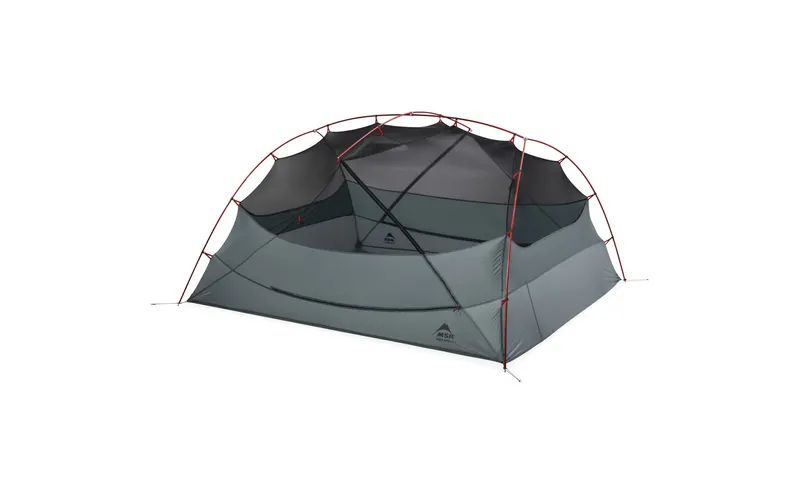
Light enough to carry in, sealed enough to sit out a storm, and roomy enough that a third person is not a punishment.
Why it is here
This is the only tent here that has come through both summer thunderstorms and sub-freezing nights with nothing getting inside. It was slept in from August to November with two adults, an infant and a dog, and pitched without a footprint on hard, spiky ground that left the floor undamaged. Weather sealing and a floor that tolerates abuse rarely arrive in the same package, and almost never in something this light.
MSR leads on breathability and a mostly micromesh body, and that claim survives contact with reality: it ventilates well with the rainfly on, which is more than the family tents further down can say. In gusts of around forty kilometres an hour it held without extra guylines, shuddering but never folding, and the thicker poles it uses compared with the two-person version are why it feels planted.
Everything below it is better at exactly one thing: more floor, less weight, or less money. This is the one that does not make you choose. For a season that runs from black fly weather in May to frost in September, refusing to specialise is the most useful thing a tent can do.
Best for
- Three-season backcountry trips
- Two adults plus gear
- Wet shoulder season nights
- Rocky or hard ground
What sets it apart
It has been through both driving summer storms and nights below freezing and stayed dry in each. The rest have proved themselves against one kind of weather, not both.
Worth knowing
- It is heavy for anyone genuinely counting grams, and it takes up enough ground that finding a flat site takes longer than it should.
- The guy-out adjusters on the end walls are fiddly, and the solid lower canopy walls move less air than the previous generation did. On a still, warm night you will want every vent open.
Limestone 6-Person Tent
Best for a family basecamp
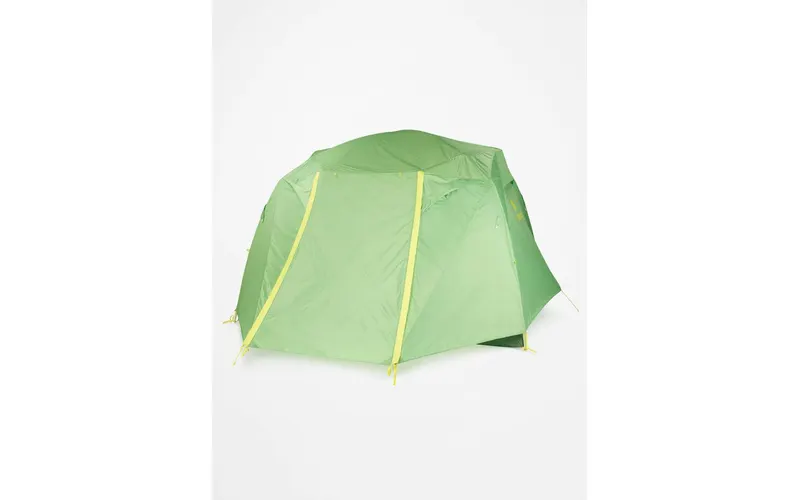
The closest thing here to a room, with vertical walls, a door you can open a corner of in the rain, and a fly that has earned its keep.
Why it is here
Marmot builds the Limestone around pre-bent poles that push the walls upright, and the payoff is an interior that reads as a room rather than a shelter. Steep sides, standing headroom for most adults, and enough floor that three or four people live in it rather than sleep in it. One person can pitch it and strike it alone, in seven to ten minutes.
What lifts it above cheaper family tents is the rainfly: full coverage, seam taped, ceiling vents, and it has handled wind and rain rather than merely survived them. The quad-zippered front door lets you crack a corner for air or drop the whole panel to load gear, which is what you notice on the fourth wet day at the park.
The trade is airflow once the fly is on. You have to roll back a corner of the door flap to get anything moving, and the tent holds heat in warm weather. In an August heat wave in southern Ontario that is a real cost. In a cold, wet week on the Gaspé it reads closer to a feature.
Best for
- Families at drive-in sites
- Long stays in bad weather
- Standing up to dress
- Setting up on your own
What sets it apart
Poles bent into shape before you ever touch them, under a full-coverage fly that is seam taped and vented at the ceiling. The other large tent here is just as tall inside, but its fly rating is modest and nobody has yet had it out in strong wind. This one has taken wind and rain and carried on working.
Worth knowing
- Six adults do not sleep in it comfortably. Three or four do. Read the capacity as a ceiling, not a plan.
- The fly snags on the sidewall poles while you pitch and the upper pole sleeve fits tight at the peak. Neither stops the job and both slow it down.
- The vestibule is shallower than rivals of the same size, so wet packs and muddy boots compete for it.
Elixir 2-Person Backpacking Tent
Best value in rough weather
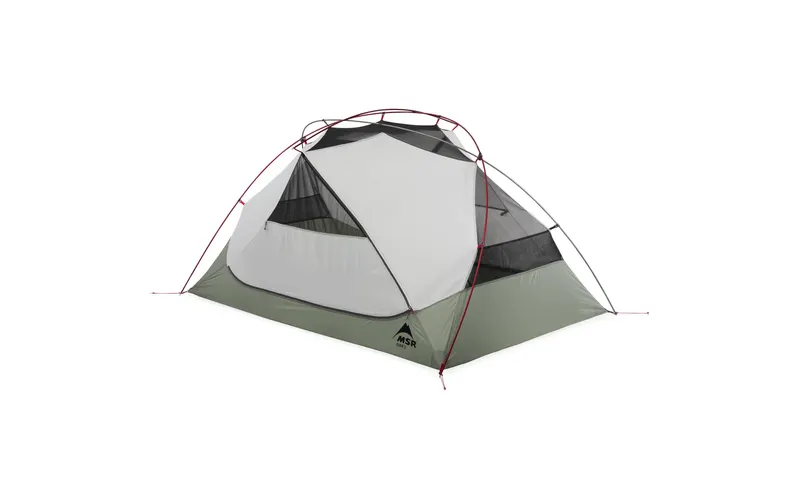
The one to take when the forecast is bad and the budget is not generous. Heavier than it looks, and built out of tougher stuff than its price suggests.
Why it is here
Two crossing poles instead of a single hub, and the shape that produces holds its own when the wind gets up. Weather resistance and wind stability are the two things it does best, which is unusual for a tent sitting at the bottom of its maker's range. The canopy and fly are cut from heavier, more durable fabric than a tent at this price usually gets, and a footprint comes in the box. Where the four-person Marmot below trades fabric weight for portability and the big Kelty trades it for price, this one spends the money there.
Put next to other budget tents it is one of the smallest, heaviest and dearest of the group, and still reads as the premium object, because of how it is built. Both vestibules take a soaked pack or a stove run out of the rain, which on a wet canoe trip is the difference between hot coffee and a cold morning.
It sits here rather than higher because of interior length. The body is short enough that a tall sleeper's bag ends up against the wall, and on a cold night that means waking with a damp foot box. The doors are small and the pole layout is odd enough that colour coding does not rescue the first pitch.
Best for
- Wet and windy forecasts
- Two on a budget
- Canoe and portage trips
- Years of hard use
What sets it apart
It is the only tent here whose strongest showing was weather resistance and wind stability rather than comfort, weight or packed size. Built for the forecast first.
Worth knowing
- Length is the limit. Tall sleepers end up in contact with the wall, and in cold weather that puts condensation into the foot of the bag.
- It is heavy and bulky for backpacking. For a multi-day carry the lighter tents here are worth the extra money.
Tungsten 4-Person Tent
Best for four on the move
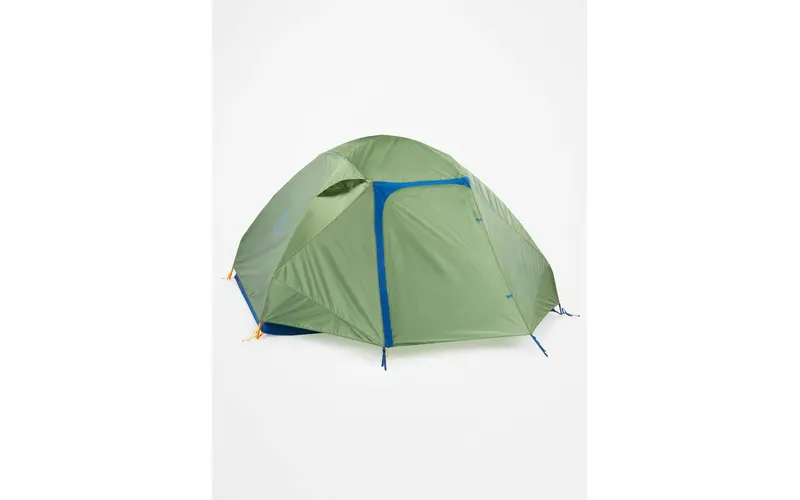
A four-person tent light enough to portage and low enough to shrug off wind, so long as you can live without standing up in it.
Why it is here
Marmot positions this between backpacking and car camping, and for once the marketing line is an accurate description. It weighs about half what the family tents here weigh and packs down to match. One person had it up in about five minutes.
The low profile is the point. It performs well in wind at the moment a tall family tent starts to flex, and on an exposed island site that buys more comfort than headroom would. A footprint is included, and the build quality came in ahead of what the lighter fabric suggests.
The ceiling is where you pay. You sit up in this tent, you do not stand in it, and after a full day of rain that gets old. Four adults fit the floor, but only in the way four adults fit a floor.
Best for
- Four people on the move
- Exposed and windy sites
- Portaging and short carries
- Fast pitches in rain
What sets it apart
It is the only tent here a group of four could realistically carry between sites. Everything else this size is a thing you drive to.
Worth knowing
- The single fly vent billows in wind and does very little. In wet weather condensation builds, so pitch it with the doors cracked wherever the rain allows.
- It does not ship with enough stakes to use every guy-out point, and blustery weather is precisely when you want all of them. Buy extra stakes and guylines before the first trip, not after it.
FreeLite 2-Person Ultralight Backpacking Tent
Best for counting grams
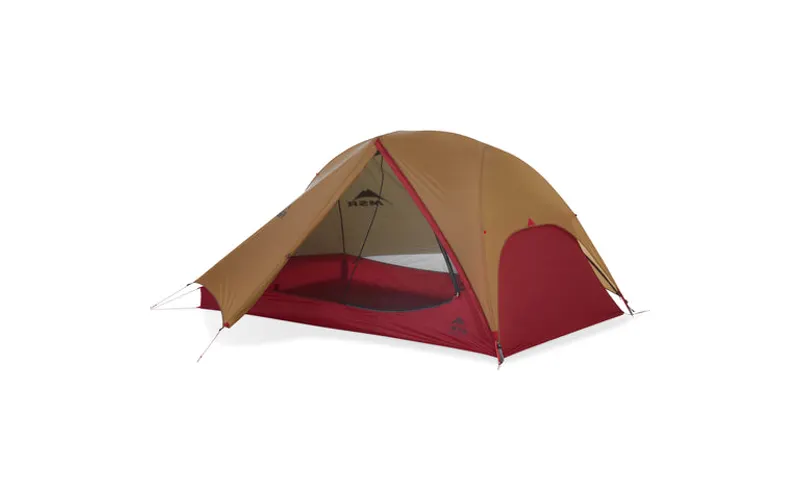
The lightest thing here by a wide margin, and every gram it saves shows up somewhere else on the page.
Why it is here
Weight is the entire argument and it is a strong one. Across more than a dozen nights out, including a sixty-mile loop, it did the job it exists to do: vanish from the pack and still keep the rain off. The steep dome sheds water well, and taped seams and a bathtub floor held through a multi-day mountain downpour.
It gives ground almost everywhere else. Livability, ventilation and packed size are all spent to buy the weight: headroom is reduced, pockets are few, it moves less air than the best of its rivals, and it packs bigger than another tent of the same weight. Snug for two and workable for one is the honest reading.
Two findings matter for Canadian use. The fly reaches only halfway at the head end, leaving a short single-wall section that collects condensation in heavy, cold rain. And the nylon slackens once the temperature drops toward freezing, which means getting out to re-tension guylines on a September night in the Rockies. Neither is a defect. Both are what the weight costs.
Best for
- Long carries
- Solo trips with room
- Dry summer conditions
- Counting every gram
What sets it apart
Nothing else here is close on weight. It is the only one a thru-hiker would put in a pack without arguing about it.
Worth knowing
- It is semi-freestanding, so both ends have to be staked. On Shield rock or a wooden platform that is a real problem the freestanding tents above it do not have.
- Canadian stock is thin. One retailer here carries it, and the rest of the listings are sold out or unpriced.
Rumpus 6P Tent
Best for sheer space
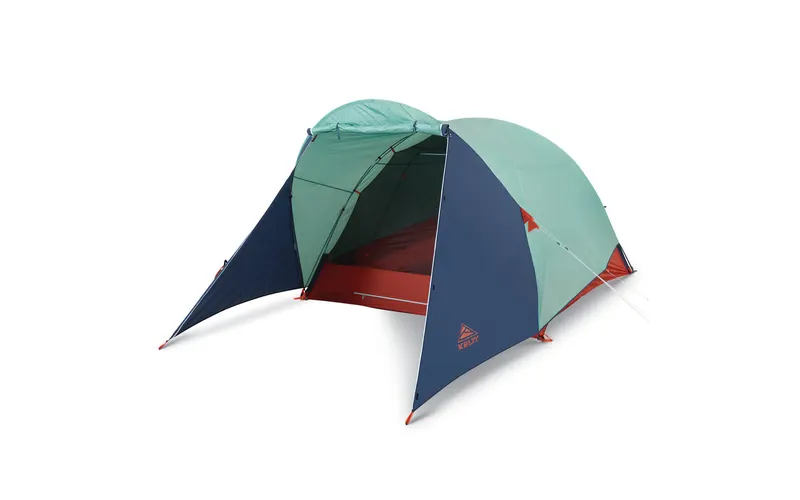
More floor than anything else here, for less than any other tent big enough for a family, with a vestibule you can park the camp chairs in.
Why it is here
Kelty sells this one on space and the space is real. The peak clears most adults standing, the interior reads as cavernous, and the vestibule swallows chairs, gear and a dog without anyone stepping over anything. For a family at a drive-in site that is most of what a tent has to do, and it does it for less than any other tent here you could put a family in.
Setup is quick with colour-coded poles, guylines come pre-attached, and with both doors open the airflow is genuinely good, which is the exact complaint levelled at the larger Marmot above it. An afternoon of rain ran off the fly without a drop coming through.
The fabric is where the savings live. It is workmanlike rather than high-spec, and the fly's waterproof rating is modest: adequate for ordinary rain and not obviously more. Nobody has yet put it through strong wind, and the tall walls that make it pleasant to stand in are the ones most likely to move when it blows. Kelty's own page is all vestibule and lifestyle, silent on wind, seam sealing and season rating. That gap between promise and proof is why it sits last.
Best for
- Drive-in family camping
- Chairs and gear undercover
- Warm nights, doors open
- Sheltered, treed sites
What sets it apart
The only tent here with a vestibule you can furnish, and the only large one that moves real air with both doors open.
Worth knowing
- It does not sleep six. Plan for four adults, or two adults and two children.
- Condensation formed on the inside of the fly overnight, so expect to wipe it down or pack it damp.
- It has not been through strong wind, and the tall walls are the part most likely to complain when it is. Take the sheltered site.
Side by side
| Product | Strongest at | Price | Capacity | Doors | Minimum weight |
|---|---|---|---|---|---|
| Hubba Hubba LT 3-Person Tent | Best overall | $789.95 | 3 person | 2 | 4 lb 6 oz (1.98 kg) |
| Limestone 6-Person Tent | Best for a family basecamp | $704.99 | 6 person | 2 | 15 lb 12.7 oz (7,164 g) |
| Elixir 2-Person Backpacking Tent | Best value in rough weather | $399.95 | 2 person | 2 | 5 lb 2 oz (2.33 kg) |
| Tungsten 4-Person Tent | Best for four on the move | $504.99–$505.00 | 4 person | 2 | 7 lb 15 oz (3,600 g) |
| FreeLite 2-Person Ultralight Backpacking Tent | Best for counting grams | $589.95 | 2 person | 2 | 2 lb (0.91 kg) |
| Rumpus 6P Tent | Best for sheer space | $429.99–$449.00 | 6 person | 2 | 17 lb 6 oz (7.87 kg) |
Which one for your situation
- Two of you walking in for a long weekend
- Hubba Hubba LT 3-Person Tent Light enough to carry and roomy enough that the packs sleep inside instead of out in the rain.
- A week at a provincial park with kids
- Limestone 6-Person Tent Vertical walls, standing headroom and a fly that has already proved itself against a wet week.
- The biggest tent you can get for the money
- Rumpus 6P Tent The biggest floor and the biggest vestibule here, as long as you take a site with trees around it.
- A canoe trip with four people and portages
- Tungsten 4-Person Tent Half the weight of the family tents and low enough to hold steady on an exposed site.
- A carry long enough that weight decides everything
- FreeLite 2-Person Ultralight Backpacking Tent Nothing else here is close on weight, and it shed a multi-day downpour without letting go.
- A forecast of rain and wind and a tight budget
- Elixir 2-Person Backpacking Tent Wind stability and weather resistance are what it does best, and both vestibules take soaked gear.
What to spend
| Job | Typical range | What moves it |
|---|---|---|
| Entry-level frontcountry tents | $150 to $350 | Fine for summer weekends in the trees. Thin poles, basic flies, very little tolerance for wind. |
| Three-season backpacking tents | $380 to $600 | Buys a shape that has been out in weather, two doors, and fabric that lasts seasons rather than trips. |
| Family basecamp tents | $400 to $750 | The extra money buys upright walls, a full-coverage taped fly and aluminum poles that survive an exposed site. |
| Premium three-season and ultralight tents | $550 to $900 | The band the first pick sits in. The money buys a shape and a fly proven in serious weather, or weight removed at the cost of headroom, pockets and ventilation. |
| Stakes, guylines and a footprint | $40 to $120 | Most tents ship with too few stakes for their own guy-out points. Budget for a decent set. |
Canadian prices in CAD, before tax. They move with sales and exchange rates.
How to choose
Freestanding earns its weight here
A great many Canadian sites are Shield rock, hardpack or a wooden platform, where a stake will not hold at any angle. A freestanding tent stands up regardless. A semi-freestanding one needs both ends pegged, and on granite that becomes an evening of piling rocks on guylines.
Minimum weight is the marketing number
Minimum or trail weight counts the body, fly and poles and nothing else. Packed weight is what actually goes in the pack: stakes, guylines, sack, sometimes a footprint. The gap is often most of a pound, and the packed figure is the one you carry.
Sizing up costs less than it looks
One more place than there are people is the cheapest comfort upgrade in camping: packs, boots and a wet dog end up somewhere other than where you sleep. It costs little here, because the larger models still pitch in minutes and still go up with one person. Buy exact only if you are carrying it.
Look for the fire label
Tents sold in Canada must meet a national flammability and labelling standard, in force since late 2024 with a two-year window for existing stock that runs out this year. The label is a legal minimum, not a fireproof claim. No tent fabric belongs near a stove or lantern.
Check what holds the vents open
A hood with a stiffener behind it holds a vent open once the wind arrives. A plain flap with nothing behind it shuts in the exact weather it was put there for. Look at each vent from the inside, with the fly on, before you buy.
Vestibule figures do not compare
Makers quote this three ways and you cannot line them up: a square footage, a depth, or the words extra-large and no figure at all. Work out what has to fit under there, two packs, boots, a stove out of the rain, and judge depth and photographs against that.
Questions people ask
Where do I actually buy these in Canada?
All of them are carried by Canadian outdoor retailers, in CAD and with no border paperwork. Stock is the thing to watch rather than price: the lightest tent here is thin on the ground, while the family tents are widely available. Colours and sizes swing hard between spring and late summer.
Is it cheaper to order from a US site?
Usually not, once everything lands. A courier shipment owes duty above a low threshold and tax above a lower one still, and the free-trade exemption only covers goods actually made in North America, which most tents are not. Add brokerage and the discount disappears. Buying here also keeps a warranty claim domestic, which matters on tents sold with lifetime coverage.
How does the warranty work if I buy in Canada?
Buy from an authorized dealer and keep the receipt, because coverage runs to the original owner with proof of purchase. It covers defects in materials and workmanship, for a fixed term of years or for the practical lifetime of the tent depending on the maker. Wear is never covered: abrasion, faded colour, UV damage, the tear you put in it on a rock.
Three-season or four-season for Canadian camping?
Three-season covers nearly everything most people do here, including cold nights and hard rain. Four-season tents are built for sustained snow loading and mountain wind, and in exchange they are heavier, hotter and worse ventilated the other nine months. None of the tents on this list is a winter tent, and none pretends to be.
Why do I wake up wet when it did not rain?
Condensation. The fixes are small and you do them on the night: crack both doors even when it is cold, pitch on a rise rather than in the hollow where the cold settles, and wipe the fly down before packing. A short interior makes it worse, because a bag touching the wall wicks up what has collected there.
Should I buy the smaller sibling model instead?
Sometimes, but check what changes besides the floor. The three-person version of the tent at the top of this list uses noticeably thicker poles than its two-person sibling, which is part of why it holds steady in wind, so the lighter option is not simply a smaller version of the same tent. It runs the other way too: the Limestone here is also sold in a four-person version, which suits a couple with gear better than a six ever will.